
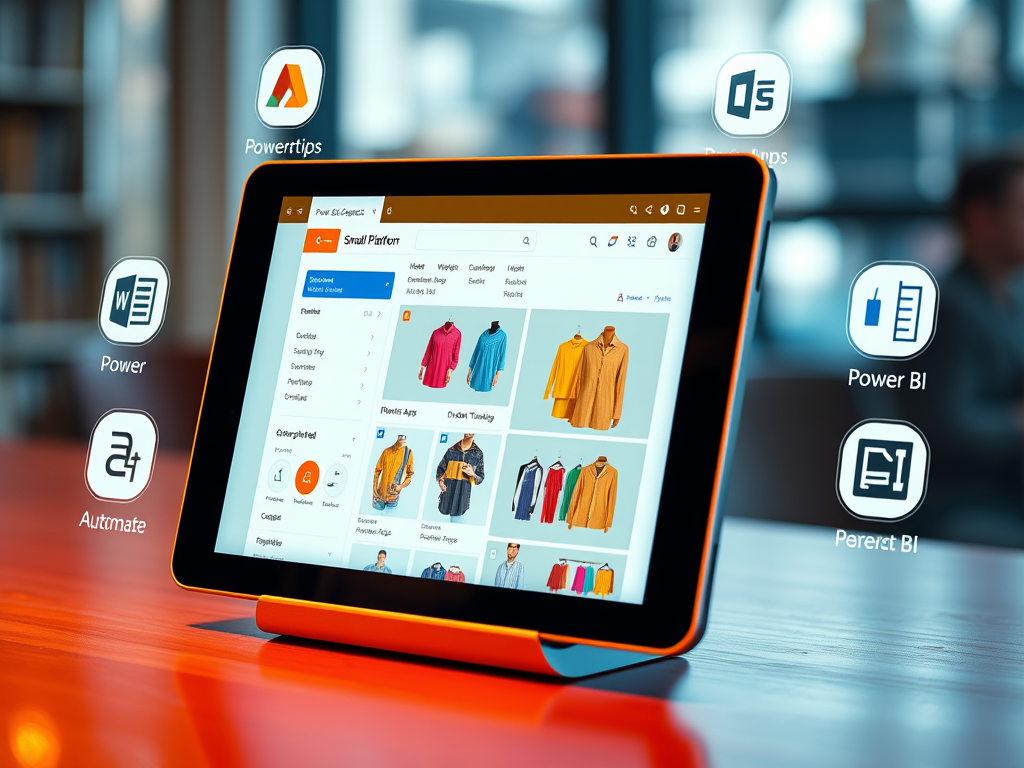
Small garment businesses often face challenges in expanding their customer base. They also struggle with streamlining sales processes and managing operations without incurring high costs. Microsoft Power Platform provides an affordable, scalable, and easy-to-implement solution to create an end-to-end e-commerce platform tailored to your needs.
In this blog, we’ll explore how small garment companies can use Power Platform to create an e-commerce solution. This solution simplifies online sales and operations. It also enhances customer satisfaction.
Why Power Platform for E-Commerce?
Power Apps, Power Automate, Power BI, and Dataverse are all part of the Microsoft Power Platform. They combine to create low-code applications. These applications integrate seamlessly with existing tools like Microsoft 365 and Dynamics 365. This platform enables small businesses to:
- Build customizable e-commerce solutions.
- Automate sales and inventory workflows.
- Gain actionable insights to improve customer engagement and sales.
Core Components of a Power Platform E-Commerce Solution
1. Customer-Facing E-Commerce App (Power Apps)
Use Power Apps to build a mobile-friendly e-commerce platform where customers can:
- Browse garments with images, sizes, and prices.
- Add products to their cart and place orders.
- Track order status and shipping updates.
Features:
- Product Catalog: Showcase your garments with categories, descriptions, and availability.
- Dynamic Pricing: Update prices easily without coding.
- Customer Profiles: Allow customers to create accounts for faster checkout.
2. Inventory Management System (Power Automate + Dataverse)
Integrate Dataverse to store product data and Power Automate to manage inventory workflows:
- Automate inventory updates when products are sold.
- Notify admins about low stock levels.
- Sync inventory data with suppliers or warehouses.
3. Order Management Workflow (Power Automate)
Streamline order processing with automated workflows:
- Trigger order confirmation emails after payment.
- Generate invoices automatically and store them in OneDrive or SharePoint.
- Notify the dispatch team with customer details and product specifications.
4. Analytics Dashboard (Power BI)
Create a Power BI dashboard to track key e-commerce metrics, including:
- Sales performance by category, product, or region.
- Customer behavior and purchase patterns.
- Profitability and inventory turnover rates.
These insights enable you to make data-driven decisions and refine your business strategy.
5. Customer Support Chatbot (Power Virtual Agents)
Offer 24/7 customer support with Power Virtual Agents:
- Assist customers in finding products or placing orders.
- Provide updates on order status or return policies.
- Escalate complex queries to human agents via email or Microsoft Teams.
Step-by-Step Implementation Plan
- Set Up the Product Database:
Use Dataverse to store garment details like product names, sizes, prices, and images. - Build the Customer App:
- Use Power Apps to create a user-friendly interface for browsing and purchasing garments.
- Customize the app with branding, categories, and payment integration (e.g., Stripe or PayPal).
- Automate Inventory and Order Workflows:
- Use Power Automate to connect the app to Dataverse and automate inventory updates.
- Set up email notifications for customers and admin teams.
- Design an Analytics Dashboard:
- Use Power BI to pull data from Dataverse and visualize sales performance and customer behavior.
- Deploy and Optimize:
- Test the app with a small group of customers and gather feedback.
- Optimize based on user feedback and launch the app to a wider audience.
Benefits for Small Garment Companies
- Cost-Effective:
Power Platform eliminates the need for expensive third-party e-commerce platforms by providing a low-code, in-house solution. - Customization:
Tailor the platform to match your business’s unique needs, such as garment categories, pricing models, and workflows. - Scalability:
Easily add features like bulk order processing, discount codes, or loyalty programs as your business grows. - Real-Time Insights:
Use Power BI to track performance and optimize operations based on data trends. - Quick Deployment:
With Power Platform, you can build and launch your e-commerce solution in weeks rather than months.
Real-World Example: Transforming a Small Garments Business
A small garment company used Power Platform to create a custom e-commerce app for their local market. By integrating inventory management, order workflows, and analytics, they reduced manual effort by 60%.
Conclusion
For small garment companies, Power Platform offers a powerful and flexible way to enter the e-commerce space. Its low-code capabilities allow you to build a personalized online store. You can streamline operations and grow your business without incurring heavy costs.
Start building your garments e-commerce platform today and bring your products closer to your customers with Microsoft Power Platform!
 LK Techs
Leave a Reply